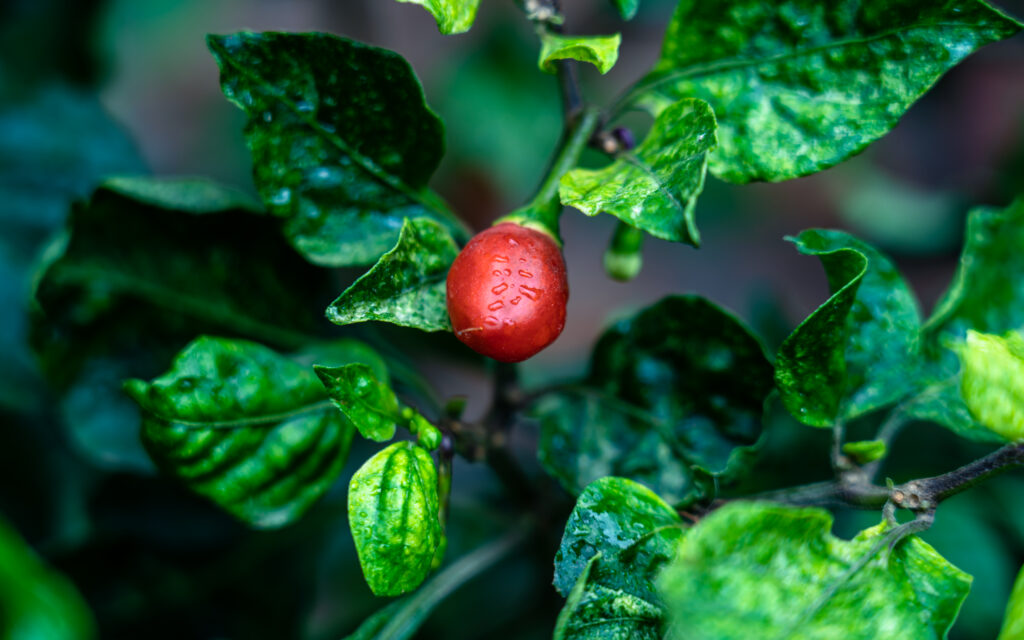
Why Seeds Don’t Want to Germinate All at Once
When germination is uneven, the most useful response is observing.
Give the tray time. Keep moisture consistent. Resist the urge to disturb the soil too quickly.
Gardening often rewards restraint more than intervention. And if you allow that process to unfold, more often than not, it all works out just fine.
The expectation we never question
There’s a moment every gardener recognises. You’ve sown your seeds, watered carefully, and waited. A few days pass, then a few more. Eventually, some seedlings appear — fragile, hopeful, doing exactly what you hoped they would do. And then… nothing else happens.
A week later, the tray still looks patchy. Some cells are full of life. Others remain stubbornly bare. It’s at this point that doubt creeps in. Maybe the seeds were old. Maybe the soil wasn’t right. Maybe you’ve done something wrong.
The assumption hiding underneath that doubt is a simple one: that all seeds should germinate at the same time. In nature, that assumption would be a dangerous one.
Survival doesn’t reward enthusiasm
Seeds did not evolve to perform neatly or uniformly. They evolved to survive. And survival, especially in unpredictable environments, depends far more on restraint than enthusiasm.
If every seed in a population germinated the moment conditions looked favourable, a single cold snap, dry spell, or heatwave could wipe out an entire generation in one go. Plants that took that risk simply didn’t last.
So they evolved a different strategy. Some seeds germinate quickly, responding to the first signs of moisture and warmth. Others hesitate. They wait for more stable signals, for patterns. A few remain dormant long after the rest have emerged, holding back until conditions improve or change.
What looks like inconsistency to a gardener is, in fact, excellent survival biology.
Seeds are cautious on purpose
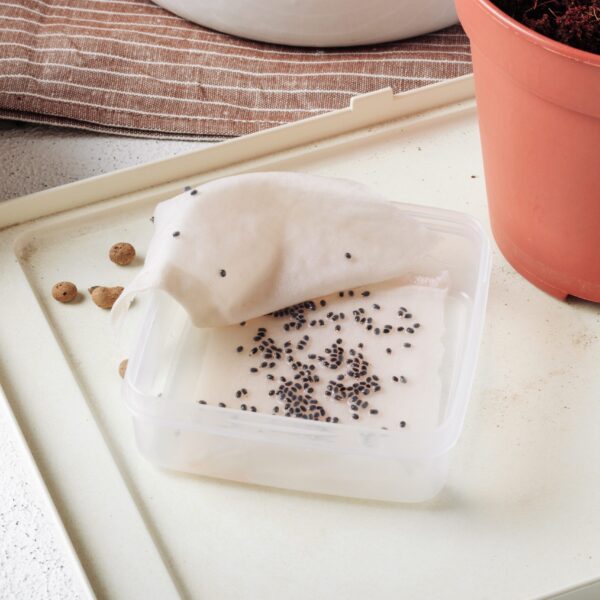
Before germinating, a seed is reading its environment. It’s responding to a combination of signals — moisture, temperature, oxygen, soil contact — and, crucially, how consistent those signals are over time.
When conditions sit in a grey area — good, but not clearly good enough — some seeds will take the risk, and others will wait. This is known as bet-hedging, and it’s one of the reasons plants have survived floods, droughts, fires, ice ages, and everything in between.
Why heirloom seeds behave differently
This staggered behaviour is especially noticeable in heirloom and open-pollinated seeds.
Commercial agriculture often selects for uniform germination and predictable timing because it suits machinery, harvesting schedules, and large-scale production. Nature has no such requirements. In a diverse genetic pool, variability is the strength.
That diversity shows up in flavour, colour, form, and behaviour. Some seedlings cope better with stress. Others respond more quickly to abundance. Together, they create resilience.
Patchy trays are often a sign of resilience
From a gardener’s perspective, uneven germination can feel inefficient. But in practice, it creates built-in insurance.
When seeds germinate in waves, not everything is exposed at the same vulnerable stage at the same time. If early seedlings struggle, later ones may thrive. If the weather shifts suddenly, some plants are still protected underground.
The mistake many gardeners make is assuming that once the first seedlings appear, nothing else is coming. Often, the rest are just waiting.
When uneven germination is a problem
Of course, not all uneven germination is intentional.
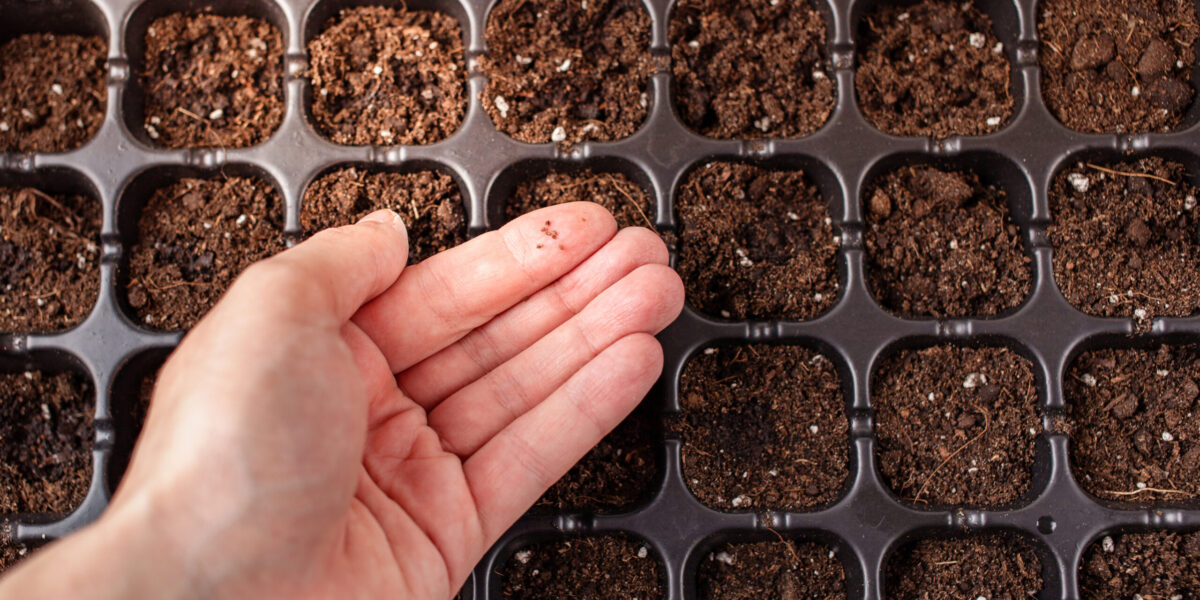
Soil that dries out too quickly, stays too wet, or swings wildly in temperature can interfere with the signals seeds rely on. Poor seed-to-soil contact can interrupt moisture uptake. These are real issues — but they tend to affect everything, not just a few cells here and there.
When nothing germinates, investigation is warranted. When some seeds emerge and others follow later — or not at all — that’s usually nature doing what it does best: hedging its bets.
What patience looks like in practice
When germination is uneven, the most useful response is observing.
Give the tray time. Keep moisture consistent. Resist the urge to disturb the soil too quickly.
Gardening often rewards restraint more than intervention. And if you allow that process to unfold, more often than not, it all works out just fine.